On Design (working thoughts)
These are working thoughts I have on design based on my experience as a founding engineer (+ designer?) at an early-stage startup.
I design and implement our brand identity and product: a workspace that helps companies making atomic-scale materials unify, understand, and improve their manufacturing processes.
I haven’t formally studied design but greatly appreciate it as a discipline and enjoy discovering the details in well-designed things. I feel a sense of joy when something is well-designed, so I strive to design things well when I have the opportunity to do so.
What is design?
If I had to define design as a practical endeavor:
- Design as an output is something that effectively communicates information and evokes feelings to guide an experience.
- Design as a process is the set of activities associated with imbuing something with these qualities.
However, I also engage with design as an intrinsically meaningful practice of applying deep care and thought. So in some sense, I practice design as a form of prayer.
The principle(s) of design
Design might be (over)simplified to a single principle that design elements serve: managing contrast.
To communicate something, it first needs to be distinguishable or legible by having enough contrast with things in its vicinity. Inverting this, if something is not as important then it shouldn’t have as much contrast.
From this, other design principles such as alignment, consistency, and hierarchy follow:
- When something isn’t aligned, that gives it unintended contrast.
- When elements (fonts, colors, etc.) aren’t consistent, it creates unintended contrast.
- When everything is emphasized by being large and bold, nothing is emphasized because there isn’t any hierarchy.
Software products layer on more difficulty: managing contrast over time as a dynamic entity evolving alongside a user’s experience.
Beautiful things work better (apparently)
When I am working on a problem I never think about beauty, I think only how to solve the problem. But when I have finished, if the solution is not beautiful, I know it is wrong.
Buckminster Fuller
I think designing something well also makes it visually beautiful. This visual aspect is important for humans because our eyes are actually two pieces of our brain projected out to the world. (!)
Beauty is a worthwhile goal because products that people think look better are perceived to work better. Conversely, highly usable products that people think look bad are perceived to work worse, independent of their actual usability.1
Visual design is the easier part
I find that the operational part of visual design - brainstorming conceptual approaches, iterating on them systematically, and making sure the sum is cohesive - is surprisingly the easiest part of the overall process.
Pre-design, the first hard part is figuring out what to design for. In other words, what exactly are you trying to communicate?
Are you trying to frame an innovation as disruptive or assistive? Are you expressing that you’re part of the in-group or bringing a cross-disciplinary perspective from the outside? Are you trying to show that you’re mature and rigorous or dynamic and savvy?
This is challenging because it depends on both yourself and your target audience - and understanding one alone is hard enough. We also often don’t know exactly what we’re trying to communicate until we put something out there and reflect on how it landed.
Post-design, the second hard part is explaining your design process. I find this tricky because design feels like a blend of unconscious, tacit experimentation alongside rigorous, systematic iteration. This means explaining your process often feels like post-hoc rationalization.
The design process is like exploring an archipelago where traveling between islands requires intuition and guesswork, while mapping out an island’s territory requires systematic exploration. Sometimes you’re on the right island and need to explore it; other times you need to find the right island. If you confuse this, you end up applying the wrong process for where you are and block yourself.
Craft, care, and outcomes
I can carry on playing at this level because I like hitting the tennis ball.
Novak Djokovic
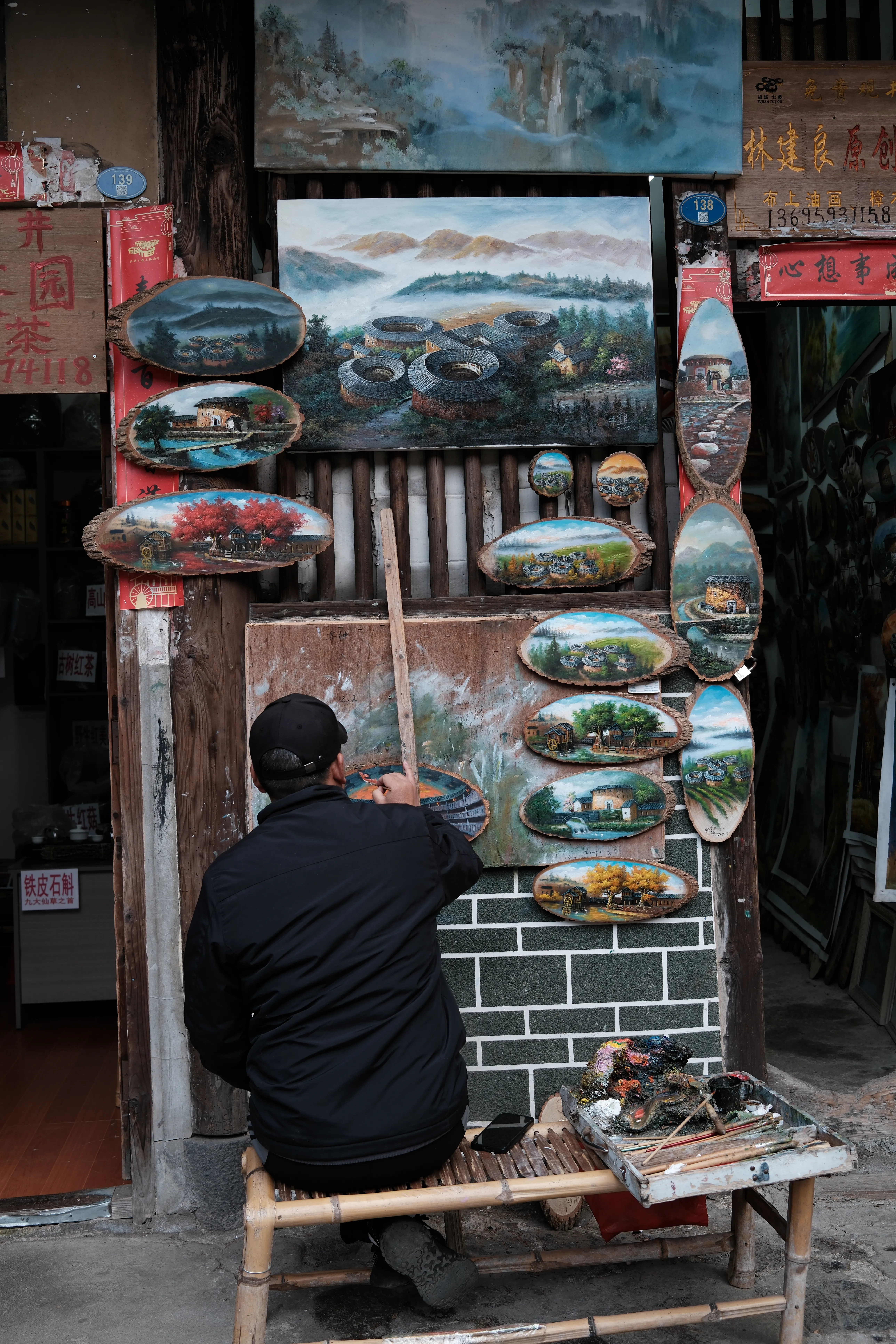
The challenge with commercializing your interests is that people are generally interested in the outcome, not the process. But as a practitioner, I think the process is the experiential part of the craft one connects with. That’s not to say I don’t care about the final outcome at all, but how I got there matters to me too.
Going for the 20% effort, 80% outcome all the time can be dangerous for long-term growth because you miss the deeper exploration and thinking that is required to cultivate excellence. It can be dangerous because you might find yourself not caring anymore.
That’s why I think it’s important to attempt the 100% effort, 100% outcome from time to time: to rejuvenate your connection with the craft.
Avoid poisoning the well
In practicing both design and engineering, it can feel like design has a higher burden of proof for justifying its existence than engineering.
For example, when engineering fails to deliver an outcome, the reaction is often that one did not do enough engineering, so the response is to do more engineering the next time around.
In contrast, when design fails to deliver an outcome, the reaction is more often that design was not capable of delivering the intended result, so the response is to do less design the next time around.
For this reason, I think it can be risky to design something or give the impression that something is being designed if you don’t have the time or skill to do it well.
What is design? (reprise)
In most people’s vocabularies, design means veneer. But to me […] design is the fundamental soul of a man-made creation that ends up expressing itself in successive outer layers of the product or service.
Steve Jobs
To me, the epitome of design is to create something that balances being in service of others with expressing one’s ideas, beliefs, and values.
In practicing design, I think reconciling this tension forces you to understand yourself better and how you see the world compared to others, which provides the right substrate for becoming a better person.
In this sense, a great design reflects a holistic integration of oneself with the world. It’s an expression of humanity, understanding, and care.
Footnotes
-
This is called the aesthetic-usability effect. ↩